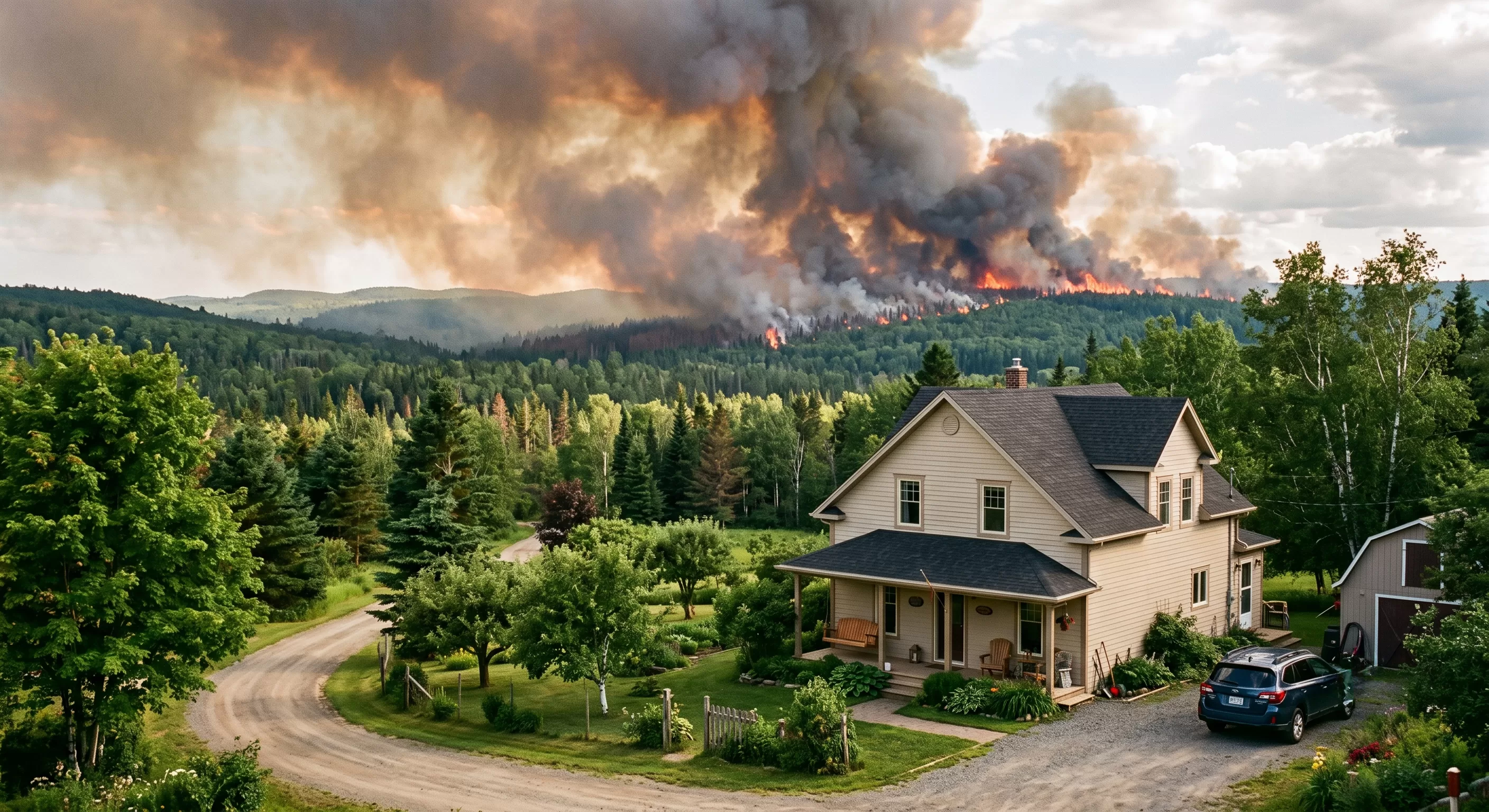
In insurance, a high-risk area is a geographic region where the probability of a claim occurring is higher than average. This includes, in particular, areas highly exposed to natural disasters or high crime rates.
These factors directly influence your insurance premium, since insurers adjust their rates based on the actual level of risk. Your insurance coverage—as well as the amount you pay—is therefore closely tied to the area where you live.
To help you better understand this, Assurance Multi-Risques provides an overview of the different high-risk areas in Quebec.
Fires and Unprotected Sectors
When it comes to fire protection, there are three levels used to classify the risk for a residence.
| Fire hydrant within 300 m | Fire station within 8 km | |
| Protected sector | X | X |
| Semi-protected sector | N/A | X |
| Unprotected sector | N/A | N/A |
Obviously, the higher the risk, the higher the premium will be. Statistically speaking, the damage is likely to be much more extensive in an area where it takes firefighters longer to respond.
Properties located in unprotected areas generally remain insurable, despite the additional premium that is charged. So rest assured, you will always be able to find insurance coverage for this type of loss.
Flood Zone
Flooding is one of the most frequent natural disasters in Quebec. This has led the provincial government to revise its flood-prone area maps in 2026. According to an independent study by First Street, approximately 79,000 homes are expected to be considered at risk. In the Haut-Saint-Laurent RCM in Montérégie and the Avignon RCM in Baie-des-Chaleurs in the Gaspé Peninsula, one in four residents is vulnerable to flooding.
Damage caused by a river overflowing or by groundwater seepage is not covered by basic home insurance policies. Adding a “Groundwater, Sewer Backflow, and River Overflow” rider to your insurance policy is therefore essential to protect yourself against water damage.
In certain areas where the risk of flooding is particularly high, it may be difficult to obtain this rider. Insurers may impose a coverage limit for damage related to river overflow or even completely exclude this protection from their policy.
Earthquakes
Contrary to popular belief, earthquakes are common in Quebec, although they are often of low magnitude. However, the risk that they could cause damage to your home is very real.
In Quebec, there are three areas where earthquakes occur more frequently:
- Western Quebec: This region covers a vast area including the Ottawa Valley, from Montreal to Témiscamingue, as well as the Laurentians and Eastern Ontario.
- Charlevoix/Kamouraska: This is the most seismically active zone in Eastern Canada. Most earthquakes occur beneath the St. Lawrence River, between Charlevoix County on the north shore and Kamouraska County on the south shore.
- Lower St. Lawrence: Approximately 60 events are recorded annually in this area located in the St. Lawrence Estuary, though they are of low magnitude.
*source: Earthquakes Canada
Damage caused by an earthquake may be covered by a rider, but this option may be more expensive depending on the region where you live.
Forest Fires
Forest fires are generally covered by homeowners’ insurance policies in Quebec. Coverage is subject to the same risk assessment as other types of fires. The premium is determined by whether the property is located in a protected, semi-protected, or unprotected area.
In recent years, with the increase in forest fires in northern Quebec—particularly on the North Shore, in Saguenay–Lac-Saint-Jean, and in Abitibi-Témiscamingue—some insurers have become more reluctant to insure properties located near fire-prone areas.
An insurer may refuse to insure new clients in high-risk areas until the situation returns to normal. For those who are already insured, the insurance company will not remove coverage that is already included in their policy. However, a surcharge may be applied.
Theft or Vandalism
Crime rates and the frequency of theft are also among the factors that identify areas at higher risk. Not surprisingly, large urban centers are the most affected, due to their high population density.
In Quebec, Montreal and Laval are the metropolitan areas with the highest number of car thefts reported each year. Under these circumstances, installing an approved tracking system (Tag) can be a good way to lower your insurance premium.
How do insurers define high-risk areas in Quebec?
In the insurance industry, it’s all about probabilities. With the impact of climate change, the areas considered high-risk could expand in the future. To assess the magnitude of the risk, insurers use government maps, but they rely primarily on their own statistical records.
Major insurers use the ZIP codes within their service areas to assess the claims rate in a given sector. Consequently, the frequency and number of claims filed in a region largely determine the average cost of insurance premiums for that area.
Being located in a high-risk area can make it difficult to find an insurer willing to cover you. This is where an independent insurance broker can really make a difference.
Your Broker, Your Ally
It’s always possible to find an insurer willing to cover you, even in a high-risk area. However, if you try to do this on your own, you’ll likely have to make several calls and take numerous steps to find the right insurance—which can be a real headache!
At AMR, as insurance brokers in Quebec, we have access to a wide range of insurance companies, and our team can shop around on your behalf to find an insurer willing to cover you at the best possible price. They can also recommend the essential coverage for your region if your area is considered high-risk.
Having trouble finding insurance in your area? Take advantage of our expertise! Schedule an appointment today.